The Game's Psychological Struggle
As the second season of The Traitors prepares to launch in 2026, fans are buzzing with anticipation for a fresh batch of high-profile contestants. But before you tune in to watch who's lying and who's loyal, let’s get one thing straight: spotting deception is a lot harder than it looks. Phys recently took a closer look at the psychological underpinnings that make this tantalizing game show a true thriller—and let me tell you, it’s a wild ride of human behavior and economic theory.
Talk Is Cheap—But So Is Accuracy
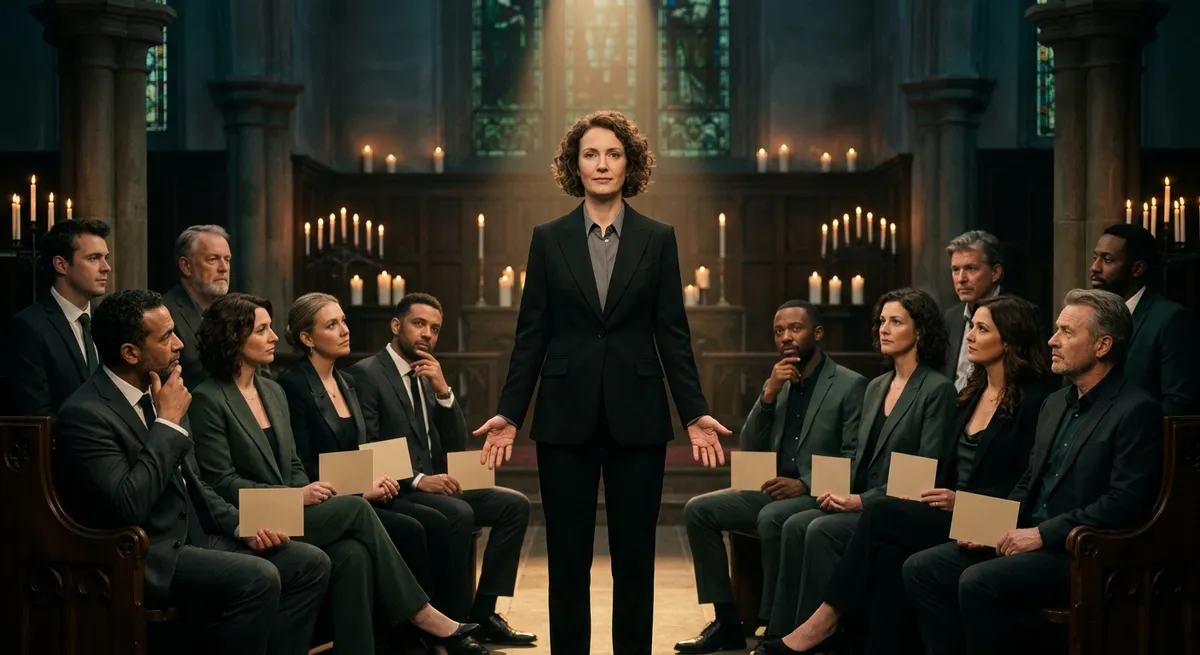
In the heart of The Traitors, players must identify a set of "traitors" hidden among them. You'd think the real-life drama would make spotting the liars a piece of cake, right? Wrong! Studies suggest that humans are exceptionally poor at detecting deception. Contestants often rely on vivid behavioral cues rather than cold, hard statistics. This reliance leads to a surprisingly low accuracy rate of just 54%—only slightly better than a dull coin flip.
This game of trust and betrayal thrives on the notion that we’re wired for narrative and emotional cues, often letting our instinctive feelings override logical reasoning. When contestants enter the arena, they’re not just playing a game; they’re grappling with their ingrained biases in a high-stakes environment, where the stakes are personal rather than economic.
What Makes Liar-Spotting So Tough?
The Traitors highlights a fascinating psychological phenomenon. It's not simply about who can shout the loudest or appear the most convincing; it’s about the subtleties of interaction. Take, for example, the classroom experiment referenced in research. They found that even when confronted with a statistical disadvantage, individuals still fell for the narrative presented by a more charismatic deceiver, a truth that echoes inside the Traitors mansion. The very structure of the game exploits this human vulnerability.
In a nutshell, vivid descriptions and emotional appeals often drown out the quieter, rational voices that might be saying, "Wait a second, let’s not jump to conclusions here!" Contestants become entranced by the drama, making it all too easy to misidentify who’s truly behind the mask.
The Emotional Rollercoaster: Voting Patterns and Group Dynamics
Now, let’s talk strategy. It's a well-documented pattern that the first round of voting often zeroes in on the most outspoken player. This is no coincidence. The psychology behind this behavior stems from a collective anxiety about spotlighting the known rather than evaluating the unknown. Contestants tend to align against the loudest voice as a protective strategy, mistakenly believing that eliminating the overt player will increase their safety.
As each round progresses, one of the most striking aspects is how voting patterns eventually unveil the only reliable evidence. Cautious players may notice subtle shifts and certain dynamics revealing who’s cautiously collaborating versus who’s scheming behind closed doors. Surprisingly, it often takes them until round three to understand that emotion alone won’t help them win.
Conclusion: Game of Wits & Misinterpretations
In conclusion, if you're diving into the second season of The Traitors, remember that our brains are hardwired to misinterpret cues of deception. This means even the smartest contestants can falter when faced with the fogging haze of emotional narratives and behavioral noise. So, grab your popcorn and settle in—but don’t expect your predictions to be spot on! The beauty of the show lies in its complexities, and that’s what keeps us all coming back for more.
Will this season’s celebrities rise to the occasion, or will they succumb to the drama? One thing's for sure: it's anyone's game, and I'm ready for the spoiler alerts!